Sustainability education through hands-on learning
Before mass production, before convenience, before disposable products - people understood materials because they worked with them.
They knew where things came from, and how long they took to make.
They valued what they owned. They chose quality, and where possible, things that could be repaired - so they would last.
Over time, we lost that connection.
Things became easier to buy, and easier to throw away.
New materials, like plastic, made it fast and inexpensive to produce at scale.
And with that shift came the problem we now face - and the rise of ideas like Reduce, Reuse, Recycle.
Of these, reduction - conscious consumption - is the most powerful.
But how can we expect people to consume consciously… if they don’t understand what they’re consuming?
This is where education plays a critical role.
When students learn about materials, how products are made, and how long they last, they begin to make more informed decisions.
They begin to see differently.
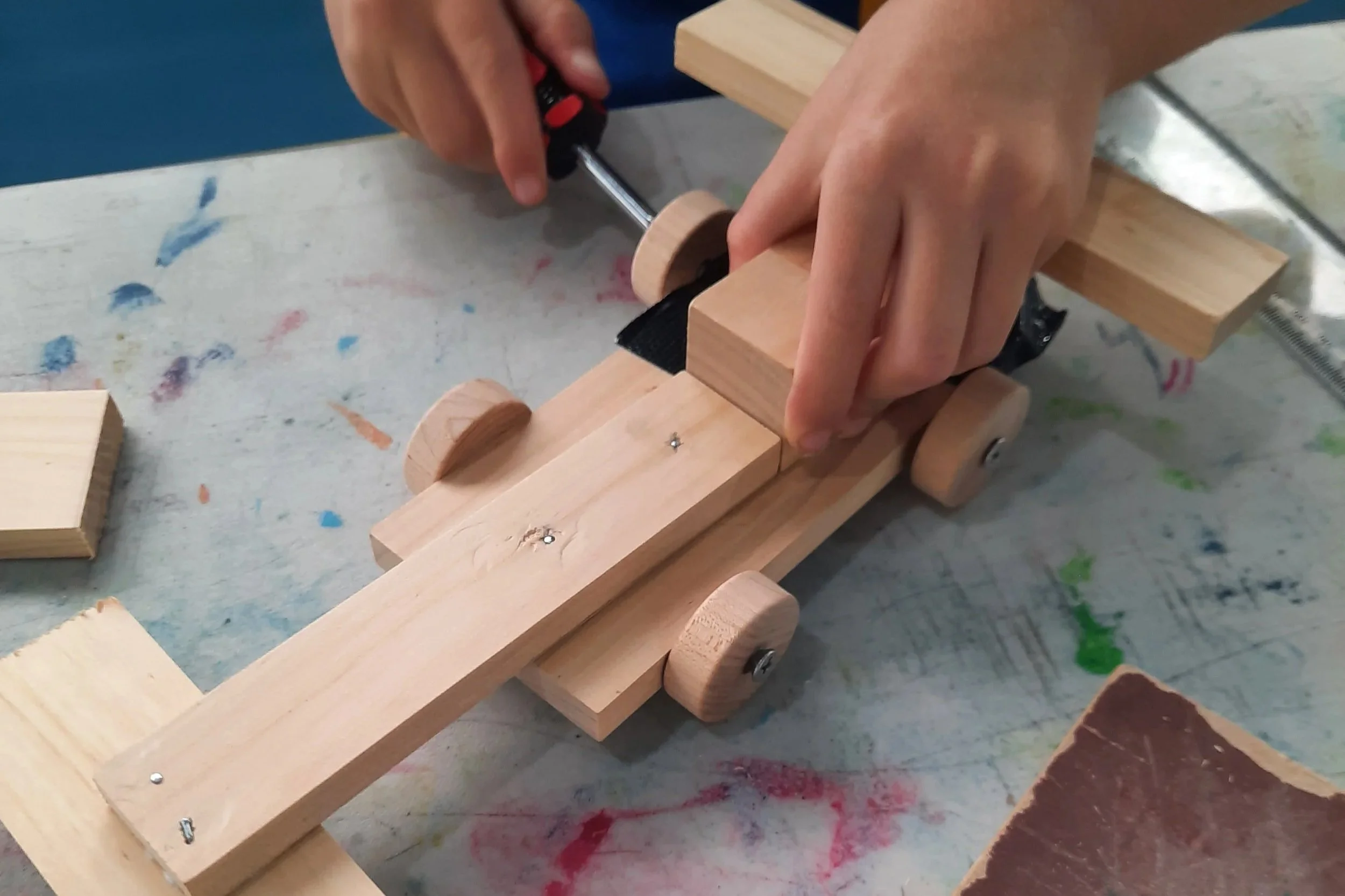
At Make+Meld, one of our key focuses is reconnecting students with wood as a material.
Timber is one of the most sustainable materials available for many everyday uses - particularly in furniture - yet most students have little exposure to it.
In contrast, much of today’s mass-produced furniture is made from materials like MDF - compressed wood fibres bonded with glues. These materials are often short-lived, difficult to repair, and easily damaged by moisture.
Solid wood is different.
It can be repaired, refinished, repurposed, and reused.
It is a material designed - and capable - of lasting.
When students design and build with real materials, something shifts.
They begin to understand effort, process, and value.
They see that materials are not endless.
That waste is a decision.
That design matters.
We don’t believe sustainability is best taught through instruction alone.
We believe it’s learned through experience.
Because when a student has made something with their own hands, they don’t need to be told to value it.
They already do.
Most programs teach sustainability as knowledge.
Make+Meld teaches it as understanding.
We don’t just teach sustainability.
We teach the skills that make it make sense.
About the Wood We Use
At Make+Meld, the softwood we use comes from plantation pine forests.
These are carefully managed environments where trees are grown specifically for building and manufacturing. Typically, trees grow for up to 30–40 years before being harvested.
During this time, forests are “thinned” - smaller or less suitable trees are removed to allow others to grow stronger. These thinned trees are not wasted; they are used for products like fence posts, mulch, and paper.
Plantation forestry plays an important role in protecting natural forests - reducing the need to harvest from native environments.
Want to learn more about plantation timbers? Here’s a link to a great video you can share with the class or child!